Edward Glover (1888-1972)
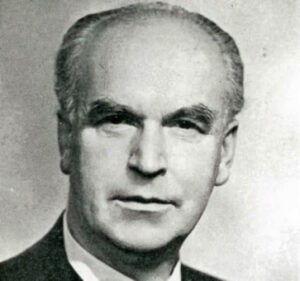 Born in Lanarkshire, Edward Glover, together with his brother, James, went to Berlin for psychoanalysis with Karl Abraham. He went on to become one of the founding members of the British Psychoanalytical Society, and cofounder of the Portman Clinic, which remains a pioneering centre for the psychoanalytic treatment of personality disorder and offending. He was a prolific and wide-ranging writer – his works include ‘The Technique of Psychoanalysis’ and ‘The Roots of Crime’ – and he was a leading voice in the Controversial Discussions of the 1940s, in which he was among the most forceful critics of Melanie Klein’s influence within the British Society.
Ian Dishart Suttie (1889-1935)
 Born in Glasgow, he went on to work at the Tavistock Clinic in London until his early death. His sole book, The Origins of Love and Hate, offered a profound challenge to Freud, arguing that human beings are born with a fundamental need for love and companionship rather than a drive towards pleasure and aggression — ideas that anticipated much of later object relations theory. He was a major influence on Ronald Fairbairn and in time, on Donald Winnicott and John Bowlby.
Ronald Fairbairn (1889-1964)
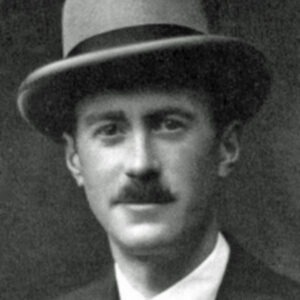 WRD Fairbairn lived and worked in Edinburgh and could be described as the ‘father of object relations’.
Isabel Menzies Lyth (1917-2008)
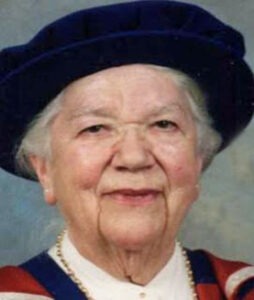 Born in Dysart, Fife, Isabel Menzies Lyth became a pioneer of the psychoanalytic study of organisations and was the only woman among the group of psychiatrists, psychologists and social scientists who founded the Tavistock Institute of Human Relations. You can read more about her here.
In both World War 1 (1914-1918) and World War II (1939-1945), Scotland provided a home for what were to become the bases of seminal contributions to psychoanalysis.
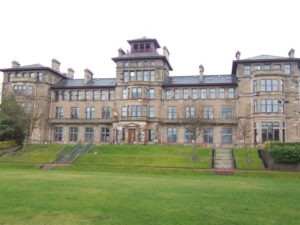 At Craiglockhart War Hospital in Edinburgh in 1917, W.H.R. Rivers — having encountered the work of Freud — began using the talking cure with soldiers suffering from shell shock. Among his patients were the poets Siegfried Sassoon and Wilfred Owen. Rivers’s work at Craiglockhart marked a turning point in the psychological understanding and treatment of trauma, profoundly influencing the care of soldiers in subsequent conflicts and laying foundations that resonate in clinical practice to this day. You can read more here.
 In 1940-41 Melanie Klein undertook the psychoanalysis of ten-year-old Richard, a boy preoccupied with his fears about the war, in the Girl Guide hut at 5 Well Brae, Pitlochry. Her careful daily recordings of these sessions, together with Richard’s drawings and her own thoughts, became “Narrative of a Child Analysis: The Conduct of the Psychoanalysis of Children as seen in the Treatment of a Ten-year-old Boy’ The Writings of Melanie Klein Vol 4 (The Hogarth Press, London 1961). This unique work has made a major contribution both to the psychoanalytic treatment of children but also to a deeper understanding of the development of our inner worlds and to Klein’s theoretical innovations. You can read more here and in the attached pdf.